In 2017 I ran a customer experience mapping workshop at Zoomcar. The goal was to explore what Zoomcar customers go through in their rental journey, map it out so that it could be discussed, and improve the experience.
In Brief
- In preparation for the workshop, we drew a rough sketch of the end to end experience.
- On the day of the workshop, we brought together 25 people from across Zoomcar.
- We began by defining the customer personas. Then we explored what each persona would think, feel, and do throughout the experience, with a particular focus on pain points and opportunities.
- Afterwards, we created a graphical representation of the experience map and posted it across the company for reference, teaching, and discussion.
- The pain points and opportunities were used to drive service improvements for the next few quarters.
- In retrospect, this was a heavy weight process, and I would look for ways to reduce preparation time, reduce the number of people, and create a experience map rapidly. We have a beautiful map, but I’m not convinced it is worth the production cost.
Start with research
One of the best ways to understand a customer experience is to live it. So I booked a Zoomcar and went for a drive. I also captured a journal of the experience on the ground and in the app.
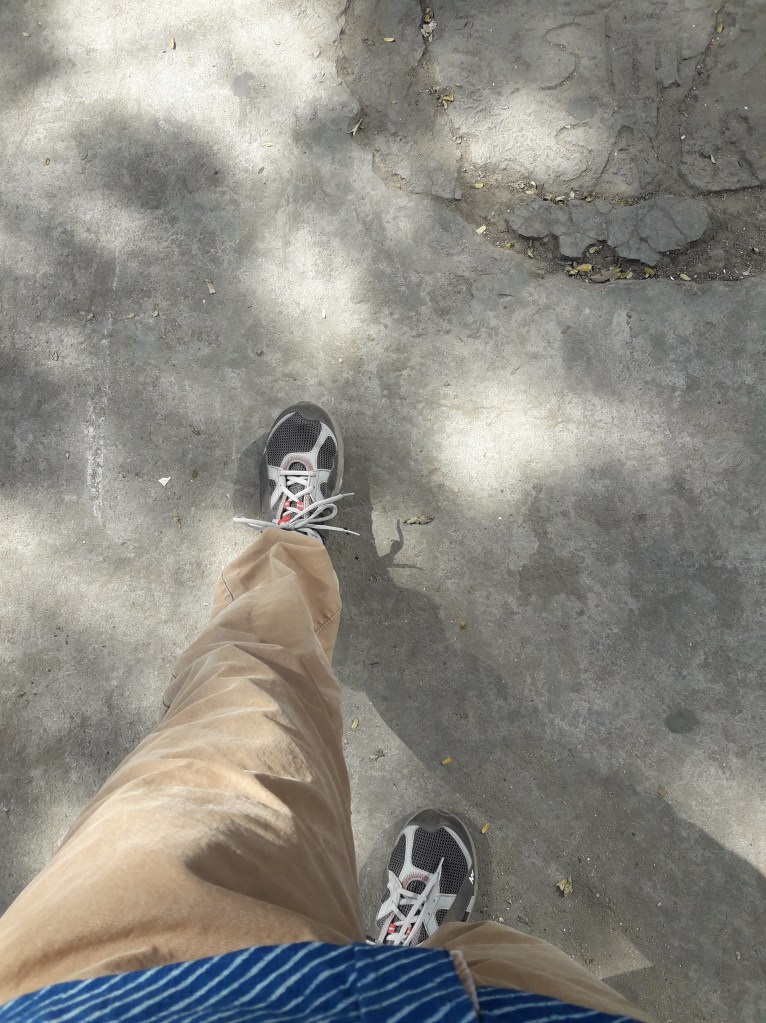
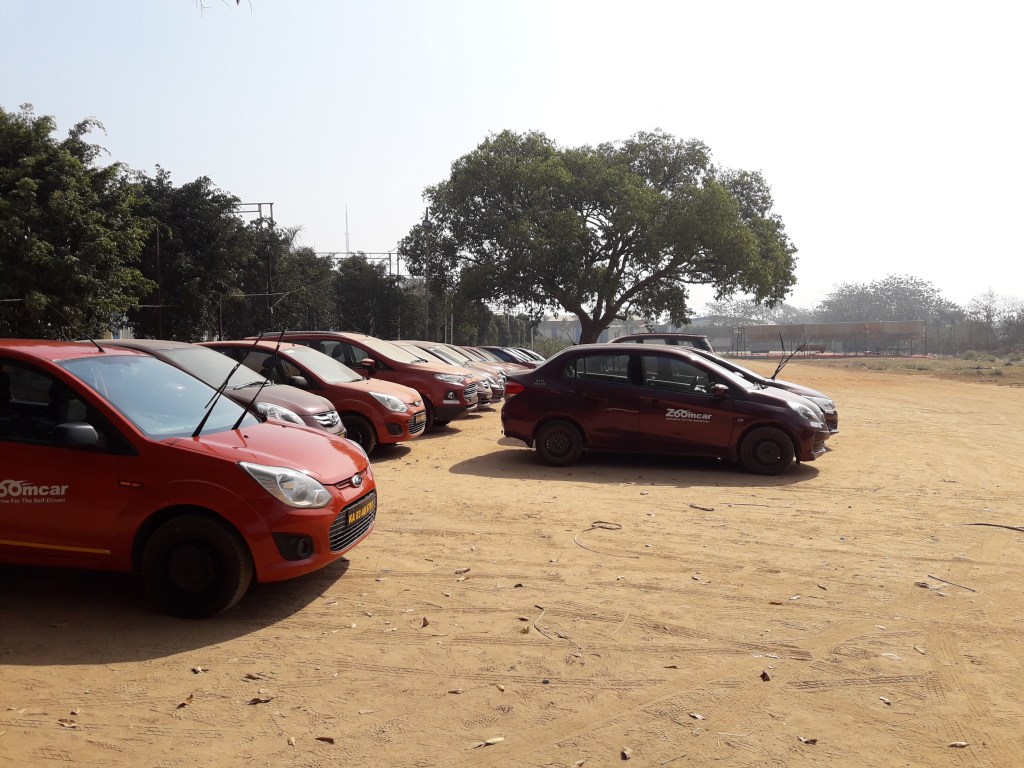
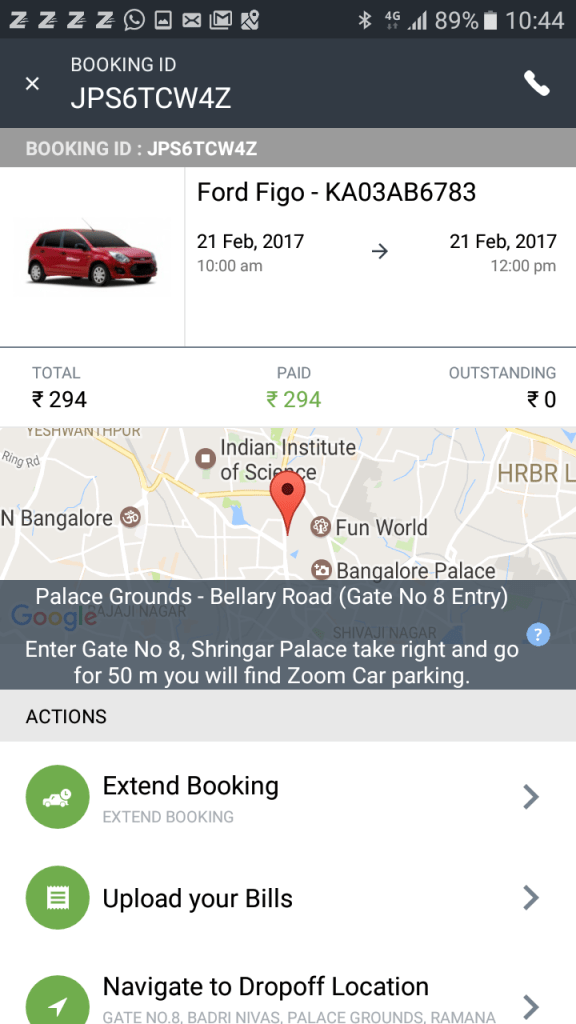
Following the test drive, I met with one of the senior product managers in the company, and we sketched out a rough map of the end to end Zoomcar experience. This included the following phases:
- Travel research and planning
- Booking
- Car pickup, driving and return
- The post trip experience, where you talk about your last trip, and think about your next trip
These phases largely represent standard service design, where you think about attraction, entry, engagement, exit and extension.
The workshop
On the day of the workshop, we brought together 25 people from across Zoomcar, including product management, design, customer support and ground operation teams.
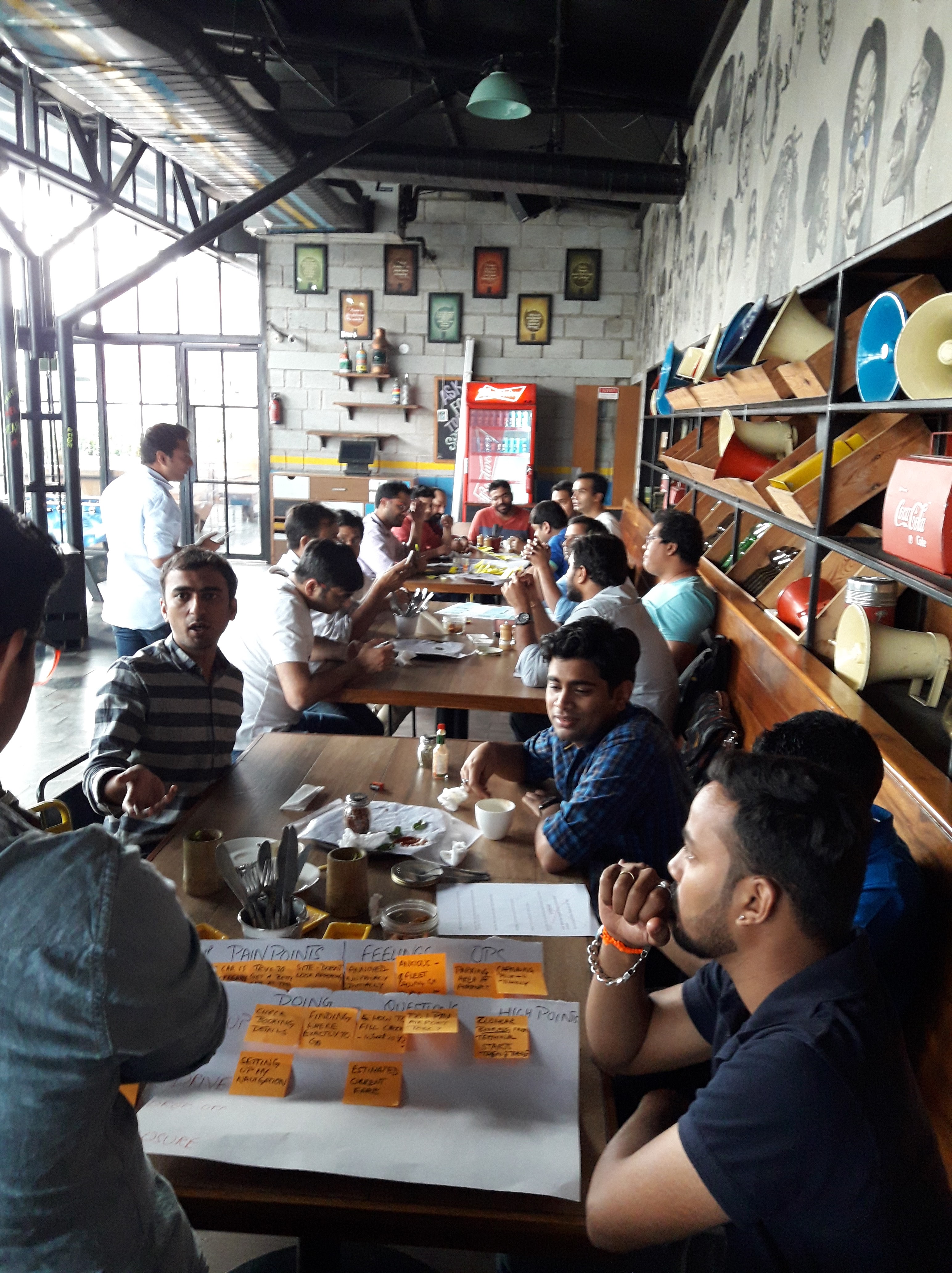
Empathize with the customer
We began by defining the customer. This was a very diverse group, so I introduced the concepts of a customer, customer group, and persona.
We broke the group into 4 teams, and then asked each team to quickly sketch out a set of prototype personas, where each persona talked about the name, demographics, behaviours and values, needs and goals.
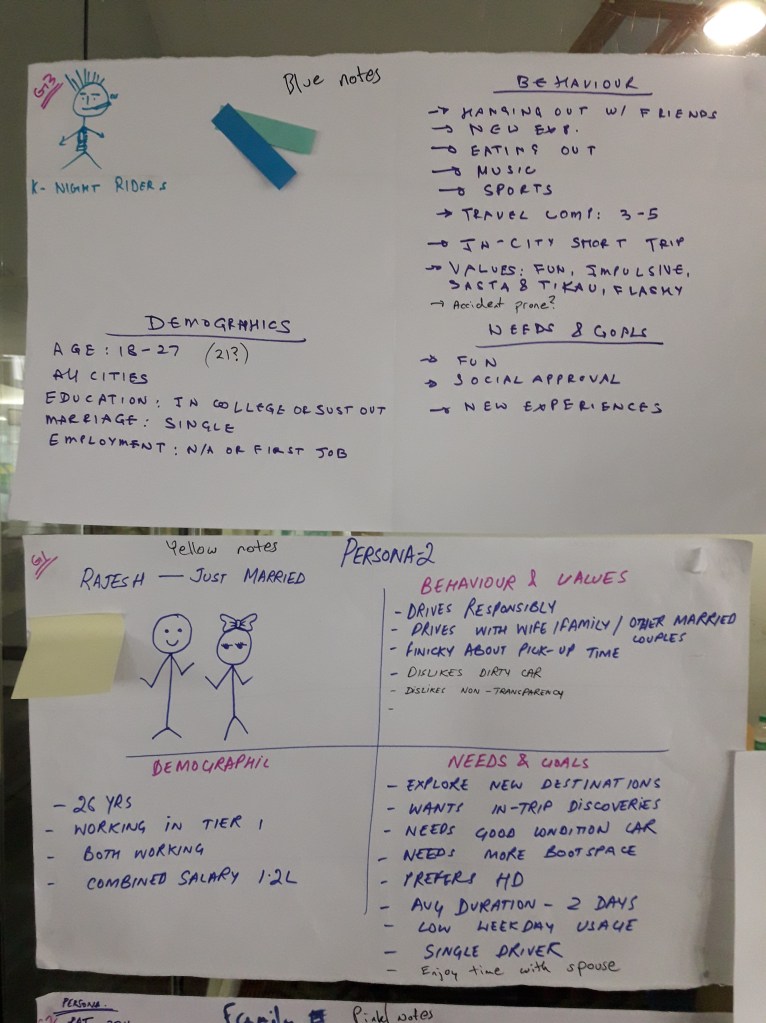

After defining the personas, we explored what each persona would do, think, and feel throughout the Zoomcar experience. We also identified pain points and opportunities for improvement.
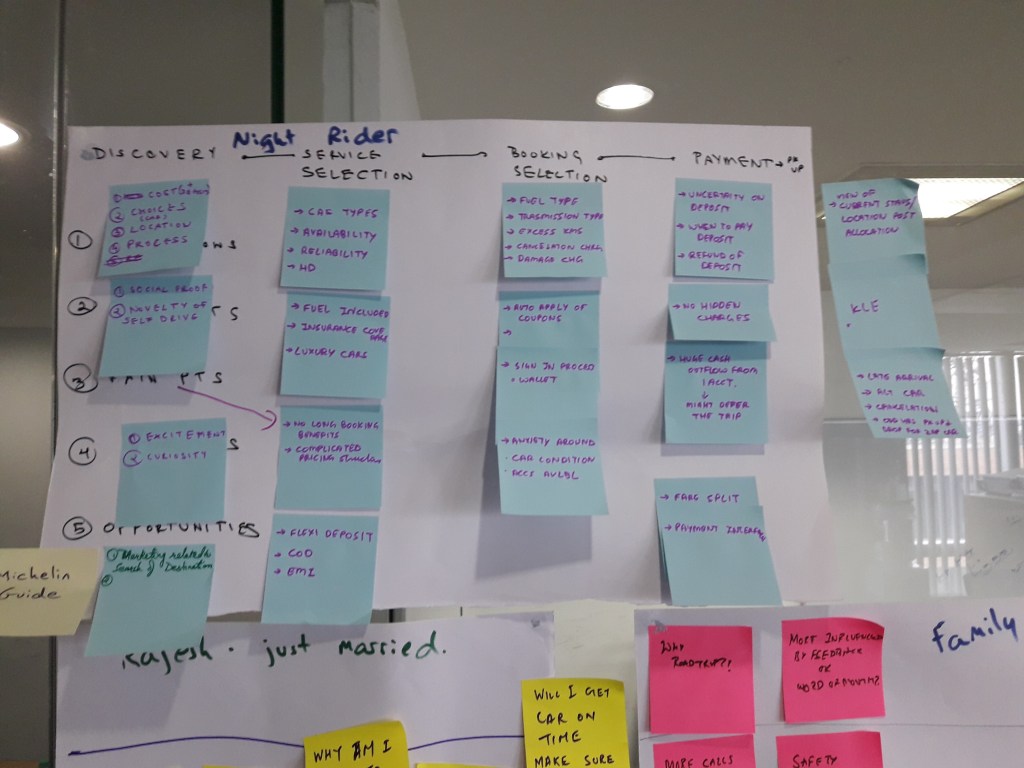
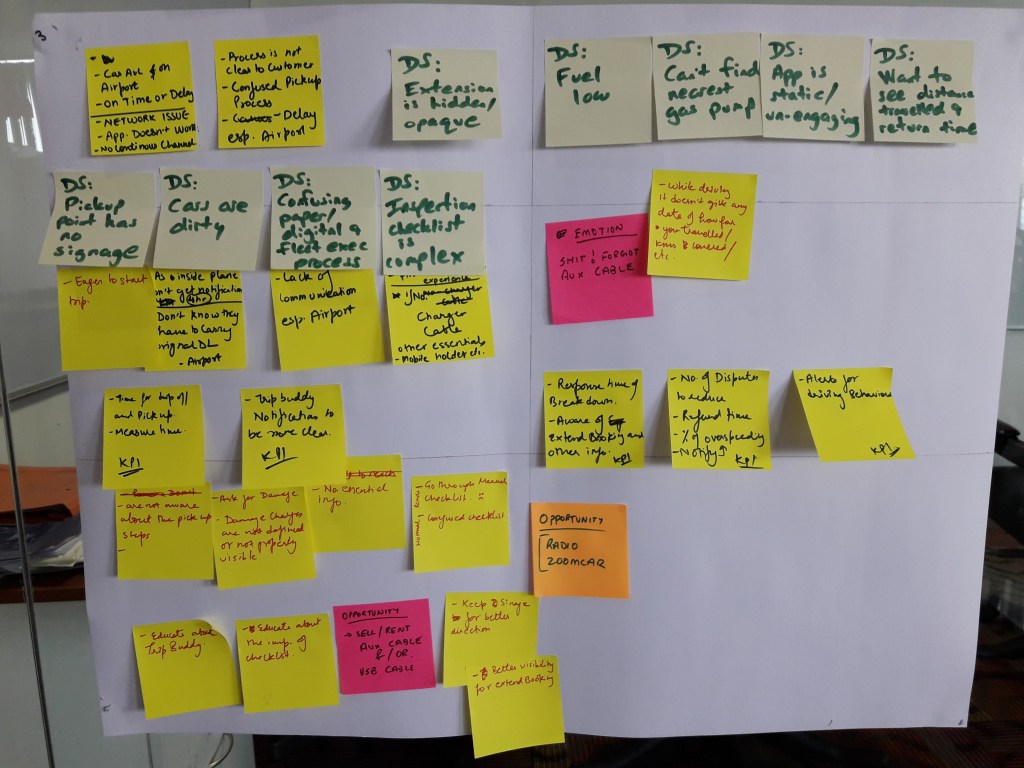
Map out the journey
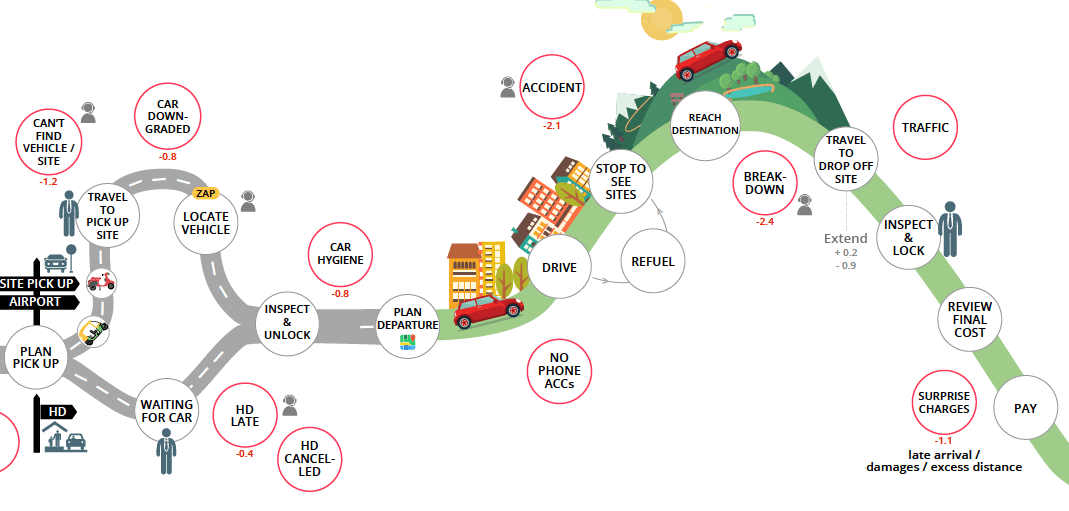
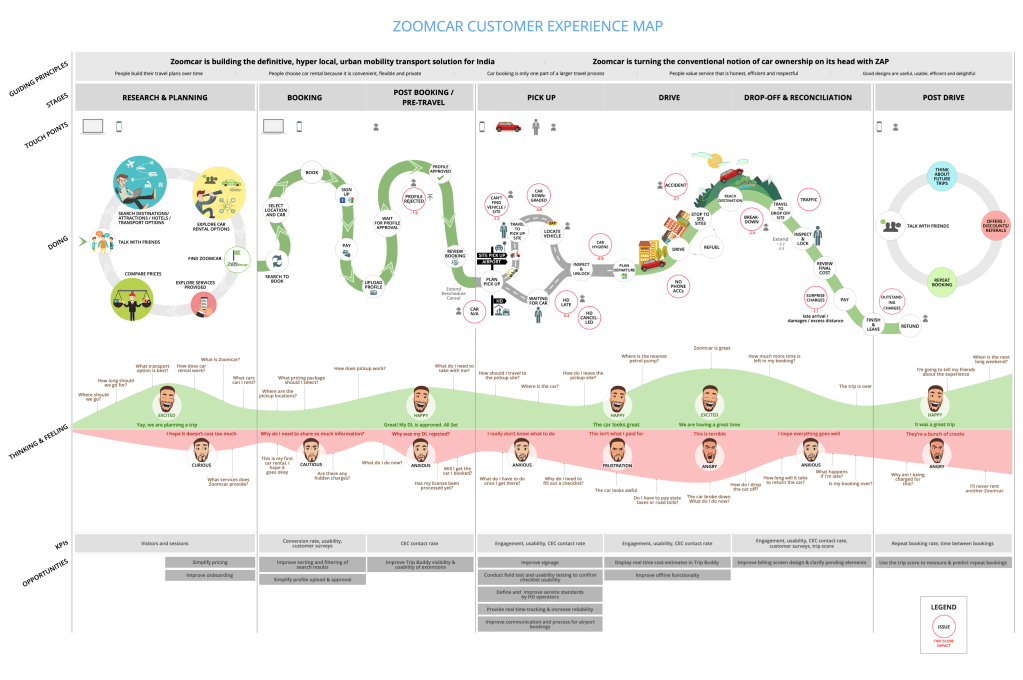
Following the workshop we created a rough graphical sketch of the experience. We reviewed the graphical version with the entire product management team, to understand where it was correct, incorrect, clear, and confusing. Then we updated it, and sent it for printing.
Here is the map. The red circles represent negative scenarios, and the number beneath them shows the impact on overall customer satisfaction.
 Dave Springgay
Leave a comment