
In 2020 and 2021 I helped lead the adoption of product led growth strategies at IBM. It was my mission to accelerate customer acquisition by blending user research, digital strategy, product design, data analysis and experimentation.
Context
- IBM has traditionally used a sales-led approach to sell software. If you wanted to buy a new product, you talked to a salesperson.
- Along with my product management and marketing peers, I pioneered the adoption of product-led growth strategies at IBM, where user acquisition, conversion, retention and expansion are driven by product use.
- I led the adoption of this strategy for 4 products within the IBM Data and AI portfolio, with an annual revenue of $1 billion dollars.
Project Outcomes
- We identified and resolved 74 issues in the marketing and trial expeirence.
- We created a culture of experimentation, where data analytics and A/B testing is used to incrementally optimize the buyers journey.
- We doubled the number of visitors to our marketing site and doubled engagement with the key features in our trial.
- We developed a series of best practices, which were used to evaluate and improve the buyers journey for over 20 products across the IBM portfolio.
Start with the user in mind
I’m going to focus on the work we did for one product: IBM Planning Analytics. It is the market leader in enterprise planning and reporting, with an annual revenue of $350 million.
At the start of this project, I led a cross discipline workshop with marketing, product management, design and development.
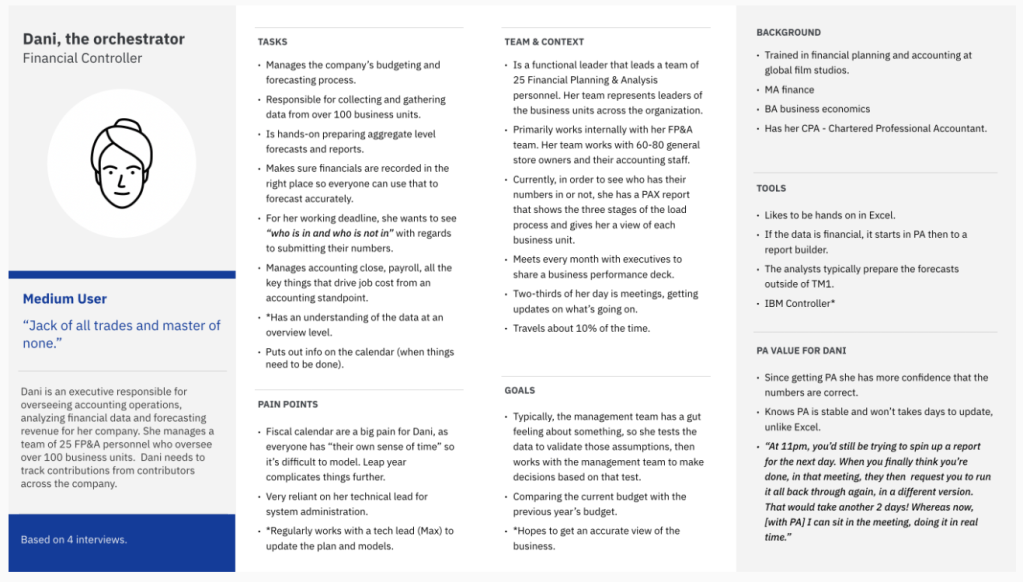
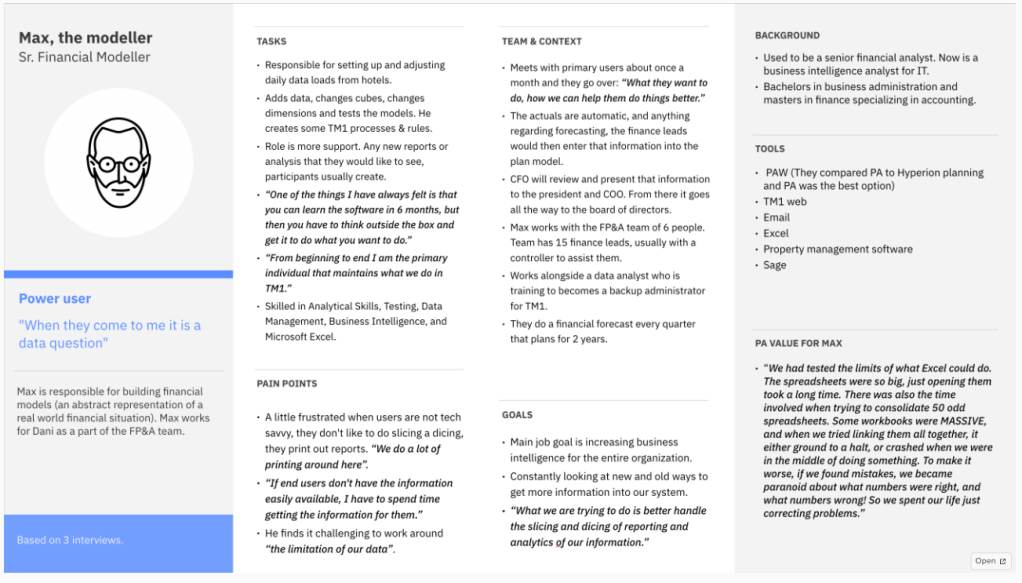
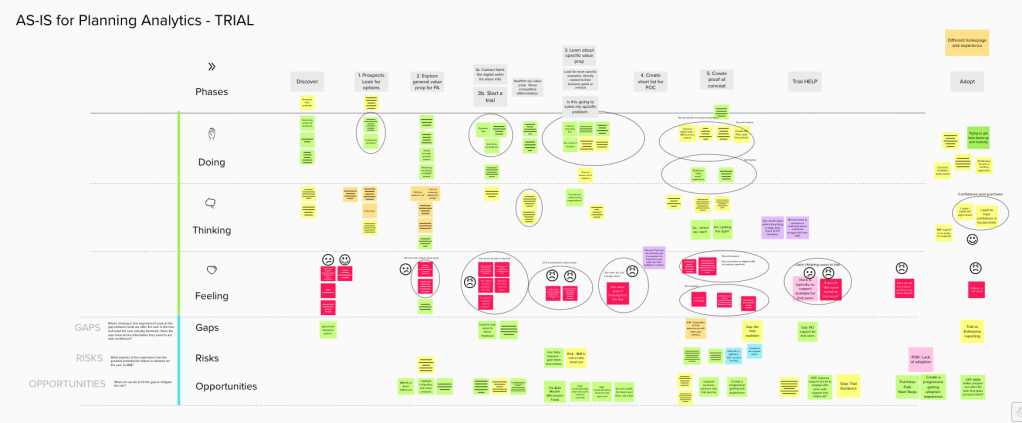
Within the workshop, we met our trial users (in digital form) and then used a digital sticky note system (Mural) to map out their journey. This helped us identify and empathize with the key steps in the buyers journey and identify gaps, risks and opportunities.
User research
After mapping the user journey and identifying the key milestones, we used two tactics to identify issues. First, we used Jakob Nielsen’s general principles to review the user experience.
Second, we conducted a usability test with six participants, recruited from respondent.io. In this test, we asked the participants to perform a number of key tasks:
- Search for a financial planning and analysis solution using the first terms that come to mind
- Look for IBM Planning Analytics
- Explore the IBM Planning Analytics marketing site and talk out loud about what you see.
- Tell us how much it costs
- Start a trial and show us what you would do to evaluate the software
We also asked them to evaluate the marketing and trial experiences on a numeric scale.
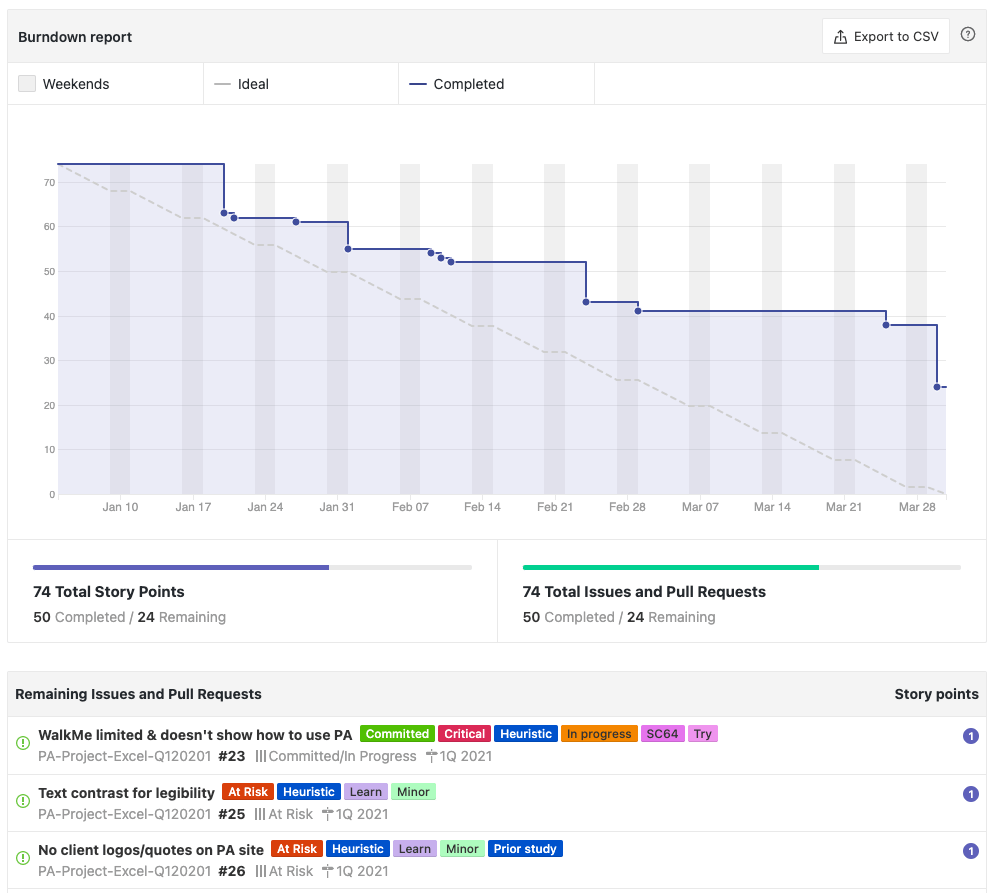
As a result of this work, we identified 74 issues within the end-to-end experience and then prioritized them by impact and feasibility. These went into github, where we could manage them and track completion.
Product led growth
In Planning Analytics I worked very closely with our data analytics lead. We developed a product led growth approach, where data was used to understand what was happening at every stage of the user journey.
- The pages your users visit
- What they look at (or don’t look at)
- What features they value
- Where they drop off in the user journey.
Over a 1 year period, we used Google Trends and ahRefs to explore search patterns on the web. We used HotJar and Optimizely to run experiments on our marketing pages. And we used Amplitude to visualize our KPI’s, analyze engagement with key features in the trial and measure the impact of our work.
These ideas were implemented in an ongoing series of two week sprints, with meetings for backlog grooming, sprint planning, stand-ups, data analysis, end-of-sprint demos and a retro. The demo was an exciting time for us, where we encourage all of the team members to share their work.
Here’s a rough outline of our sprint structure.
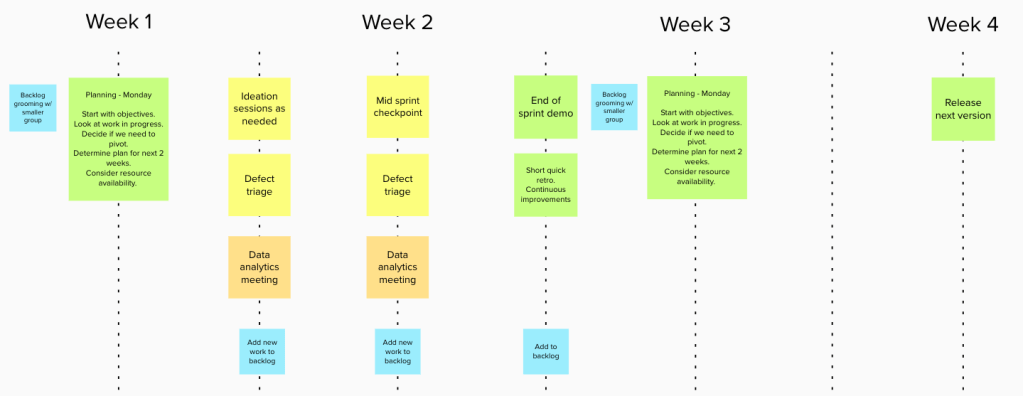
The adoption of product led growth strategy is a journey in itself. We’ve identified and worked through a number of challenges with the team:
- You need to instrument every major step along the journey. This takes time.
- There are often gaps in the instrumentation or errors in the data. Trust is also a major factor when looking at data.
- Data analysis is hard. You need to teach your team how to look at data and draw insight.
- At some point, you need to convert insights into action. Build, measure learn, and rebuild.
- It doesn’t take long to realize that some of your most cherished ideas are not so good. Over time, we’re learn to break our big ideas into small ideas so we can validate them earlier.
Samples of our work
We explored many ideas to improve the digital marketing and trial experience for IBM Planning Analytics. Here is a gallery of just some of them.
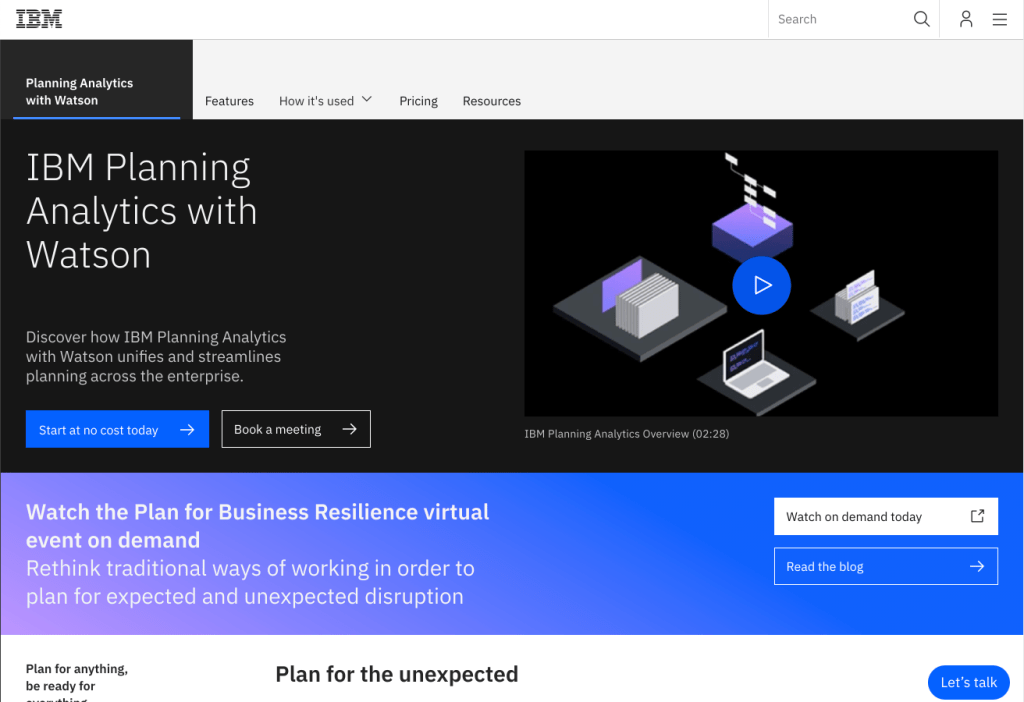
We redesigned all of the PA marketing pages 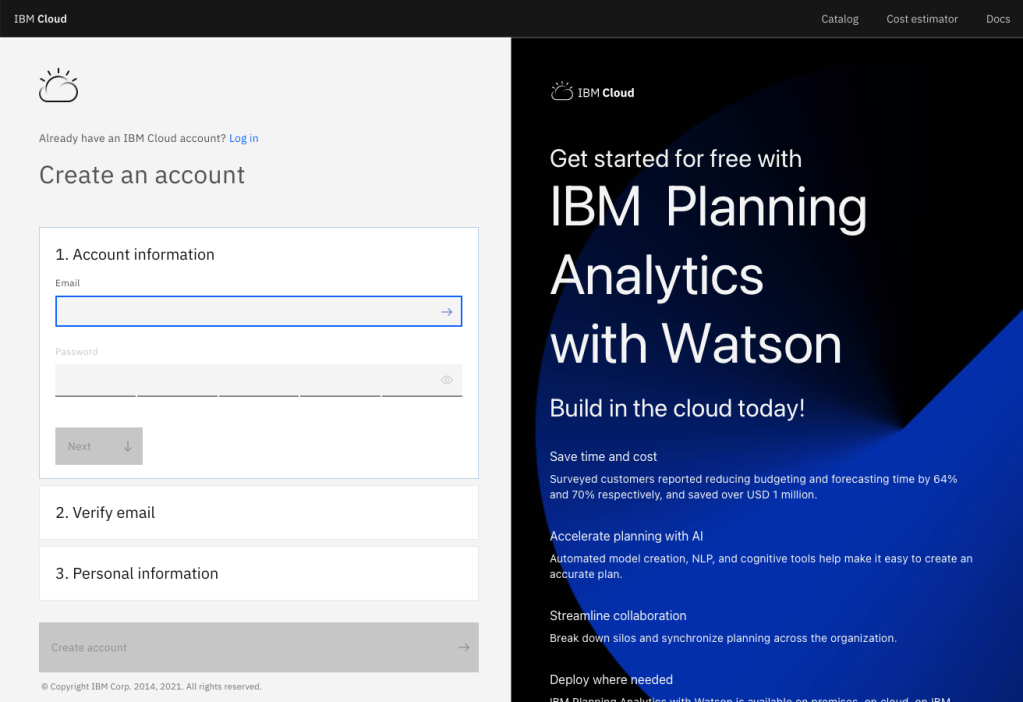
And simplified trial signup 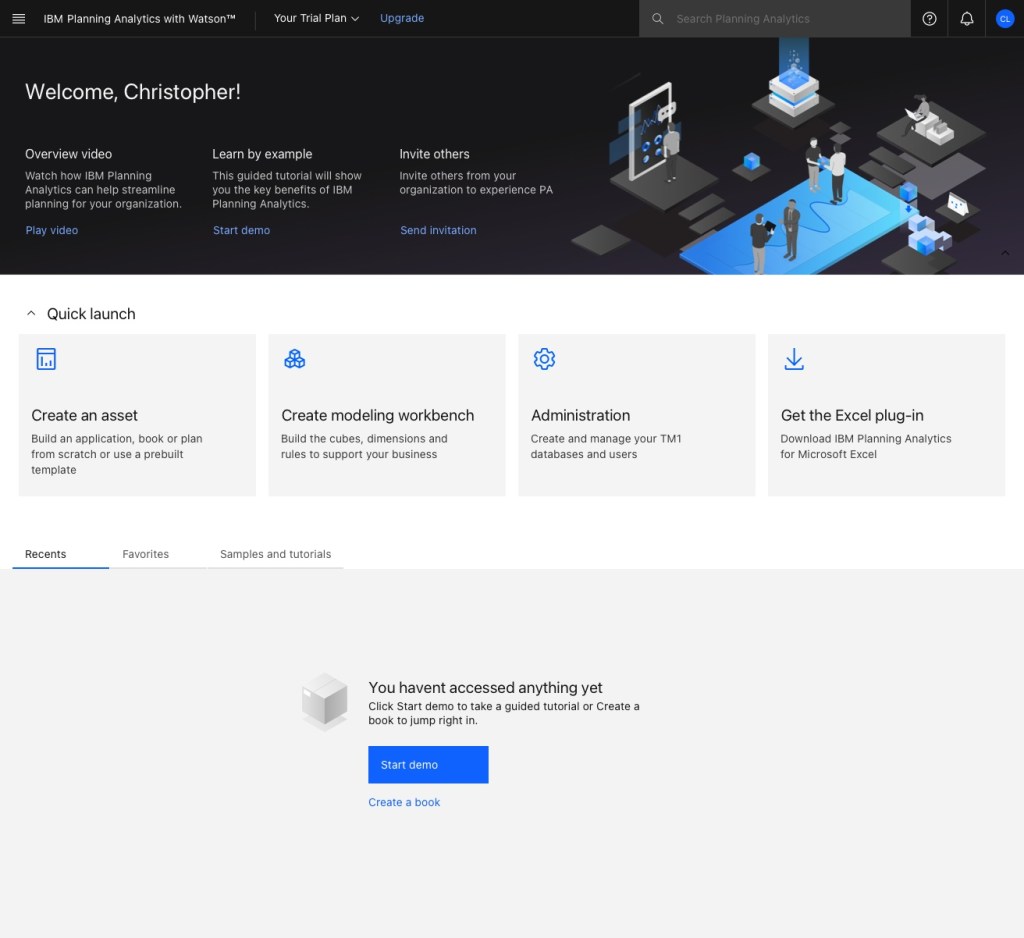
The home page for the trial was revamped to help novice users get started. 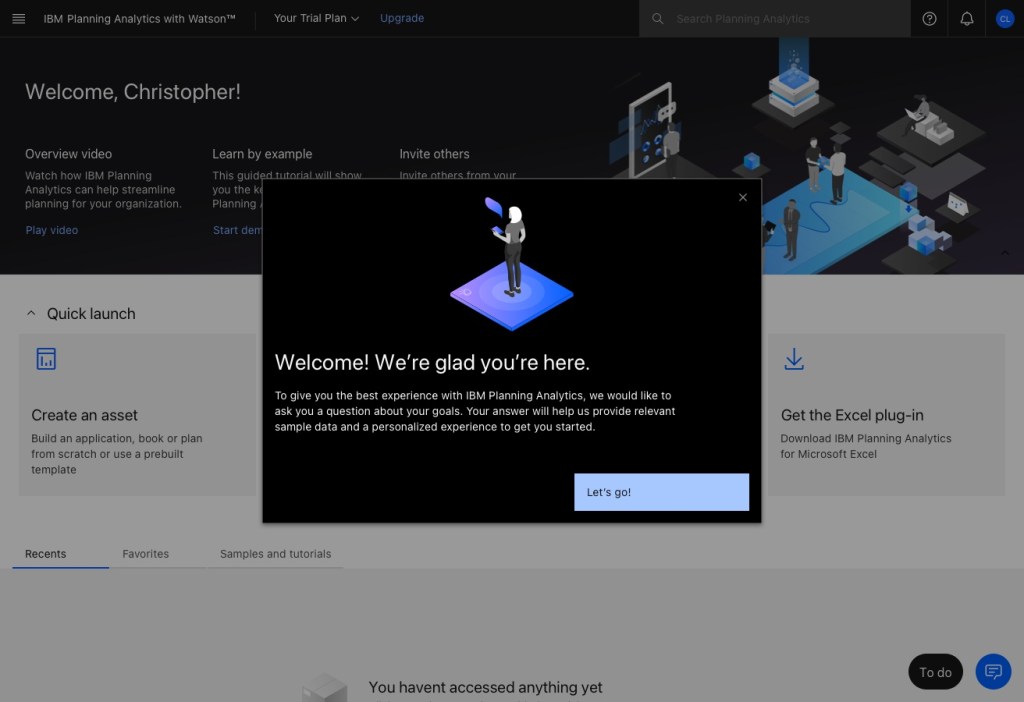
After the user logs in, we guide them through the getting started experience. 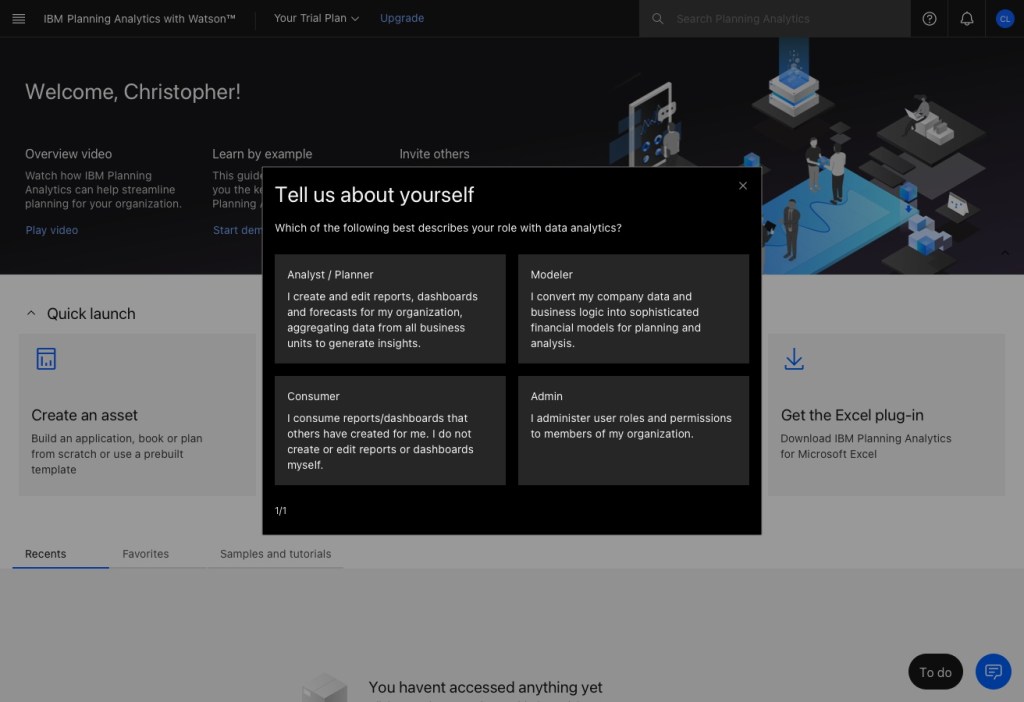
If they choose a role, we personalize the experience. 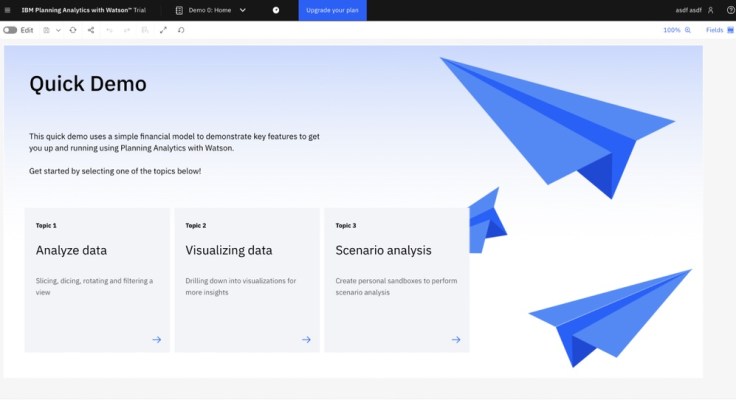
Then we demonstrate the power of the product with guided samples. 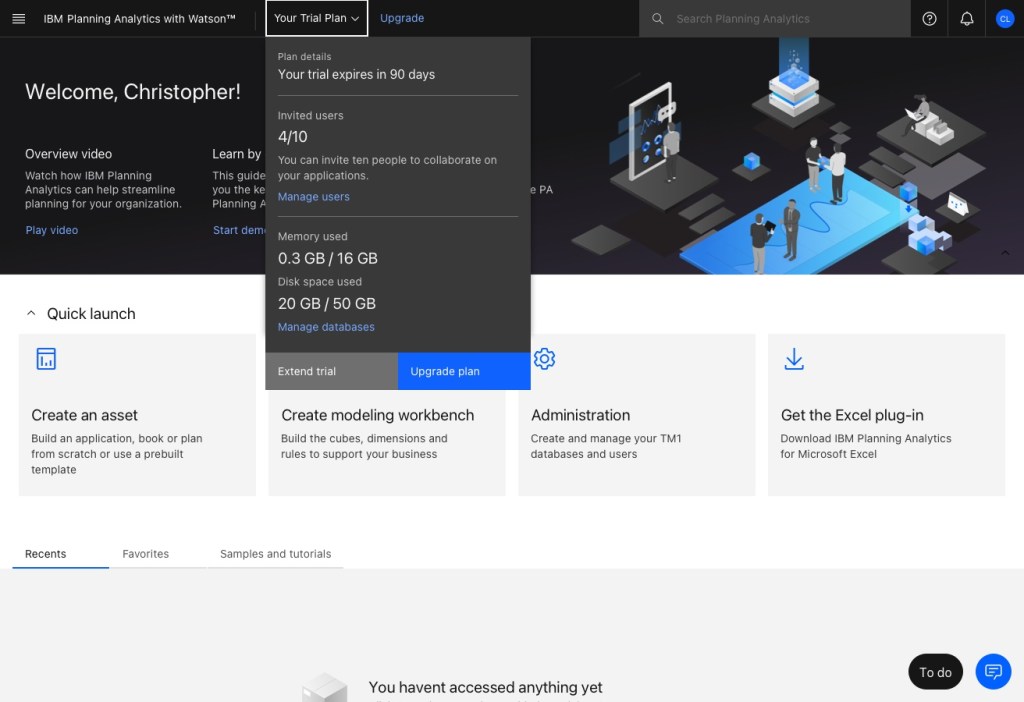
There is a 30 day trial period. 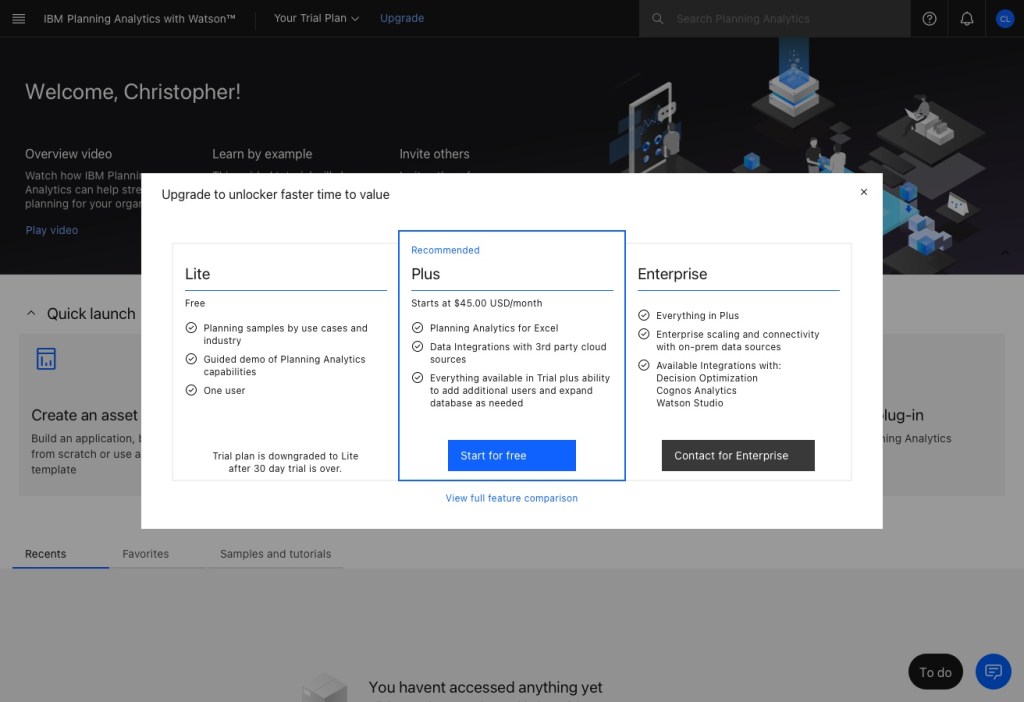
The user can upgrade to a paid subscription directly within the trial.
Best practices
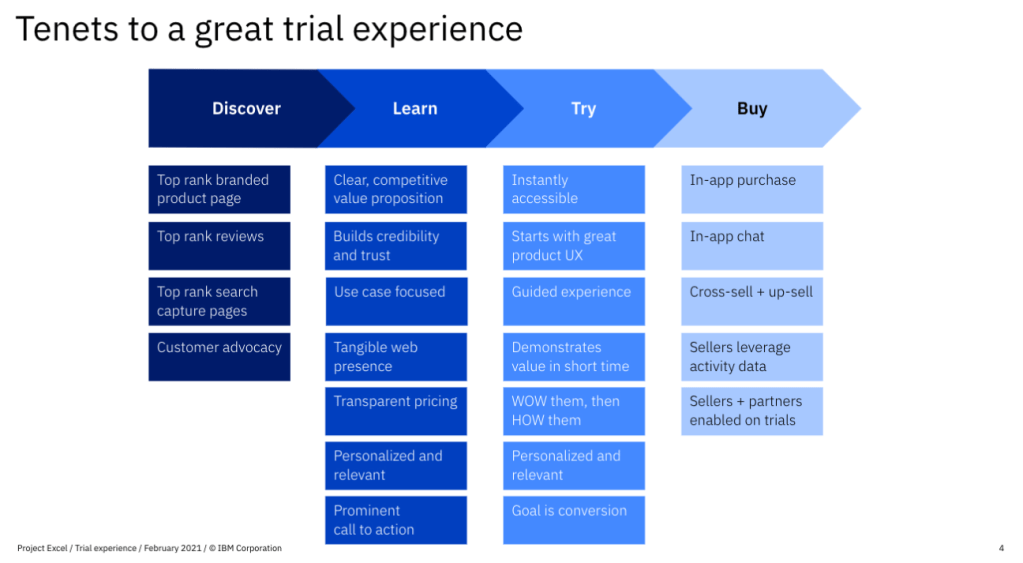
At the start of this project, IBM Planning Analytics was one of four products chosen to improve their discover, try and buy experience. In 2021 this program was expanded to 20 different products. I helped define a series of best practices for each stage of the journey, and then led the adoption across 4 other products. These practices help guide other teams as they endeavour to improve their own customer acquisition funnel.
Here is a snapshot showing the attributes of a great user journey. If you address all of these points, you’re well on your way to a great trial experience.
 Dave Springgay